30-Day Money Saving Challenge That Works: Save More, Spend Less & Reset Your Finances in 2026

The 30-day money saving challenge can completely change how you manage your money.
I’ve seen it happen. One small decision. One simple plan. And suddenly, saving money feels possible.
Maybe you’re tired of living paycheck to paycheck.
Maybe you want to build an emergency fund.
Or maybe you just want to feel more in control of your finances.
I believe saving money doesn’t have to be complicated. It just needs to be consistent.
This challenge is designed to help you take small, daily actions that lead to real results. No overwhelm. No strict rules. Just simple steps that work.
Inside this guide, you’ll learn how to follow a 30-day savings challenge, reduce unnecessary spending, and build better money saving habits that actually last.
If you’ve ever struggled with budgeting tips for beginners or staying consistent, this is for you.
Let’s make saving money simple again.
What Is a 30-Day Money Saving Challenge?
Saving money can feel hard. It can feel overwhelming. I’ve been there too. You start with good intentions, but life happens.
That’s why I believe the 30-day money saving challenge works so well. It’s simple. It’s focused. And it gives you a clear path for 30 days.
This challenge is not about being perfect. It’s about being consistent.
What This Challenge Really Means
A 30-day challenge is exactly what it sounds like:
- You follow a simple saving plan for 30 days
- You make intentional spending decisions
- You build better money habits daily
Each day matters. Every small action matters.
Why 30 Days Works So Well
There’s something powerful about 30 days.
- It’s short enough to stay motivated
- It’s long enough to build a habit
- It creates momentum
I’ve seen people go from saving nothing to saving hundreds—just by committing to 30 days.
Related: 20 Smart Ways to Cut Monthly Expenses and Save More Money
How This Challenge Helps You Save More Money
Saving money is not just about numbers. It’s about behavior. It’s about awareness. It’s about control.
I believe most people don’t have a money problem. They have a habit problem.
This challenge helps fix that.
What Changes During the Challenge
When you start this challenge, something shifts.
You begin to:
- Think before spending
- Notice where your money goes
- Question unnecessary purchases
And that’s powerful.
Real-Life Example
Let’s say you usually spend:
- $5 daily on coffee
- $15 twice a week on takeout
That’s over $200+ per month.
During this challenge, you reduce those habits.
That alone could become your first savings win.
The Hidden Benefit
The biggest benefit is not just saving money.
It’s awareness.
Once you see your habits clearly, everything changes.
Related: How to Save Money Fast on a Low Income: 21 Simple Tricks That Actually Work
Step-by-Step Plan for the 30-Day Money Saving Challenge
Starting is the hardest part. I know that. That’s why having a simple plan makes everything easier.
You don’t need complicated systems. You need clarity.
That’s exactly why this step-by-step plan for the 30-day money saving challenge matters. It removes confusion. It gives you clarity. And most importantly—it makes saving money feel simple.
I believe saving money should not feel stressful. It should feel doable. One step at a time. One day at a time.
Let’s break it down.
Step 1: Define Your Money Goal Clearly
Everything starts with a goal. Without a goal, saving money feels random. And when it feels random, it’s easy to quit.
So start here.
Ask yourself:
- What do I want to achieve in 30 days?
- How much do I want to save?
- Why does this matter to me?
Make Your Goal Specific
Instead of saying:
❌ “I want to save money”
Say:
✅ “I want to save $500 in 30 days”
That’s clear. That’s measurable. That works.
Make It Personal
I always tell people this—your goal should feel emotional.
Maybe you want to:
- Build your first emergency fund
- Pay off a small debt
- Stop living paycheck to paycheck
Write your goal down. Keep it visible. Look at it every day.
Because when your “why” is strong, your actions become easier.
Step 2: Understand Where Your Money Is Going
Before you can save money, you need to understand your spending.
This step is simple—but powerful.
Most people don’t realize how much they spend daily. Small purchases add up fast.
Track Your Spending for 3 Days
For the next few days:
- Write down every expense
- Check your bank app
- Notice patterns
No judgment. Just awareness.
Real-Life Example
You might notice:
- $5 coffee daily
- $10–$20 on snacks
- Random online purchases
That could easily be $200–$400 per month.
Seeing this clearly changes everything.
Awareness creates control.
Step 3: Choose a Simple Saving Method
Now that you know your goal and spending habits, it’s time to choose your strategy.
Keep it simple. Always simple.
Popular 30-Day Saving Methods
You can choose one:
Option 1: Fixed Daily Savings
- Save the same amount every day
Example: $10/day = $300 in 30 days
Option 2: Increasing Savings Plan
- Start small and increase daily
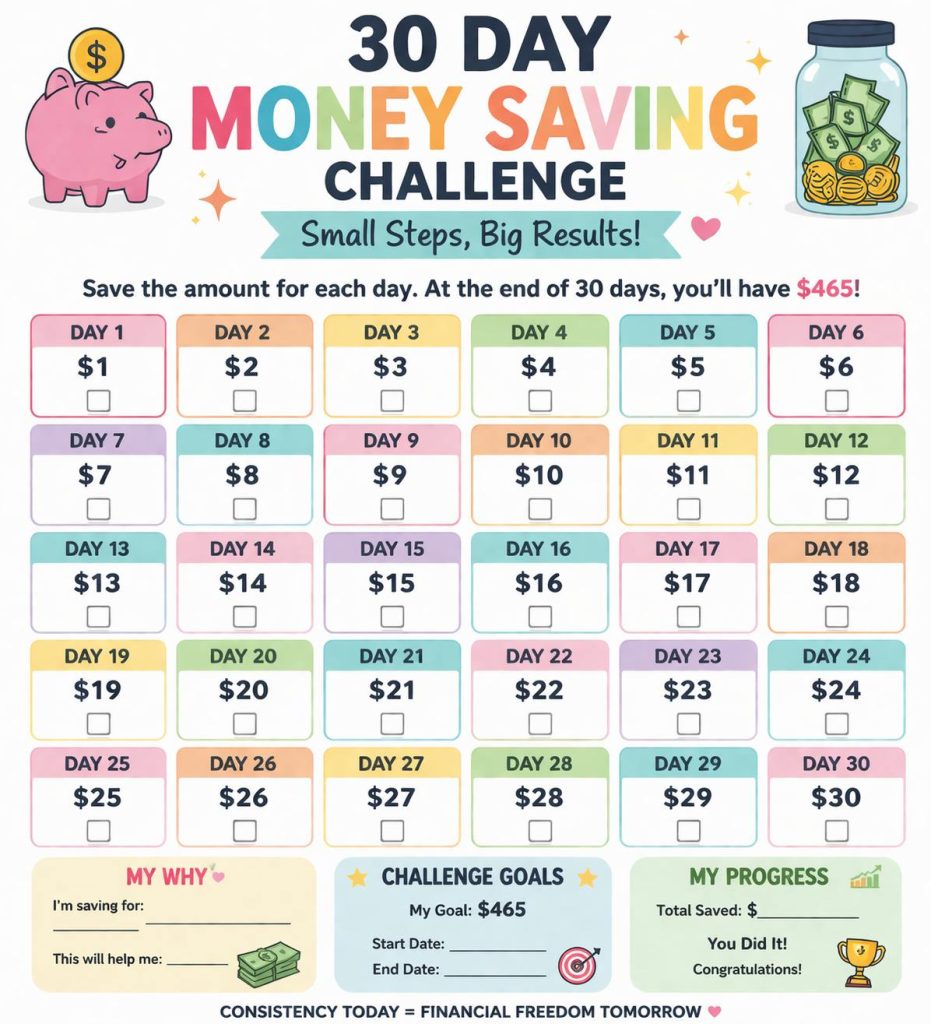
Example: Day 1 = $1, Day 30 = $30
Option 3: Weekly Target Plan
- Save a fixed amount weekly
Example: $100 per week
My Advice
Choose the method that feels realistic.
Not perfect. Realistic.
Because consistency beats everything.
Step 4: Cut One Expense Category First
You don’t need to cut everything at once.
That’s a mistake many people make.
Instead, focus on one category.
Start With Easy Wins
Pick something like:
- Eating out
- Coffee runs
- Online shopping
- Subscriptions
Cutting just one category can save $100–$300 quickly.
Example
If you stop eating out for 30 days:
- You could save $200+
- That alone might hit your goal
Simple changes. Big results.
Step 5: Create a Daily Money Routine
Saving money becomes easier when it becomes a habit.
Habits remove decision-making. And that’s powerful.
Simple Daily Routine
Every day:
- Check your spending
- Ask before buying: “Do I need this?”
- Transfer your savings
It takes less than 10 minutes.
But it changes everything.
The Pause Habit
Before any purchase:
Pause.
Think.
Then decide.
This one habit alone can save you hundreds.
Step 6: Automate Your Savings (If Possible)
Automation is one of the easiest ways to succeed.
Because it removes temptation.
How to Do It
- Set up auto-transfer to savings
- Schedule weekly savings
- Use banking apps
Why It Works
You don’t think. You don’t decide.
You just save.
And over time, it becomes normal.
Step 7: Track Your Progress Visually
Progress is motivating.
When you see results, you keep going.
Ways to Track Progress
- Use a savings tracker
- Create a simple chart
- Mark each day completed
Example
Let’s say your goal is $500.
Each time you save:
- Color a box
- Update your total
Watching it grow feels good.
And that feeling keeps you going.
Step 8: Reward Yourself (Without Overspending)
Saving money doesn’t mean removing joy.
You need balance.
Smart Rewards
- A movie night at home
- A favorite meal
- A small treat
The key is to reward without breaking your progress.
Celebrate effort. Celebrate consistency.
Step 9: Stay Flexible (Life Happens)
Not every day will be perfect.
And that’s okay.
What to Do If You Miss a Day
- Don’t quit
- Don’t feel guilty
- Adjust and continue
Saving money is a journey.
Not a straight line.
Step 10: Reflect at the End of 30 Days
This is the most powerful step.
Because reflection creates growth.
Ask Yourself
- What worked well?
- What was difficult?
- What habits improved?
Look at Your Results
- How much did you save?
- How did your mindset change?
- What can you improve next month?
This is where real transformation happens.
Simple Example Plan (Easy to Follow)
Here’s a basic plan you can follow:
- Save $10 daily
- Cut eating out
- Track spending nightly
- Review progress weekly
At the end of 30 days:
- You save $300
- You build strong habits
- You gain confidence
Simple. Effective. Real.
Related: 10 Things You Should Stop Buying to Save Money Fast
30-Day Money Savings challenge printable free
How to Use This Printable
This tracker is simple. That’s the goal. Simple works.
- Write the amount you save each day
- Stay consistent
- Watch your progress grow
Easy Example:
- Day 1 → $5
- Day 2 → $10
- Day 3 → $5
- Keep going
No pressure. Just progress.
Pro Tip (Make It Work Better)
I believe printables work best when they are visible.
- Put it on your wall
- Keep it in your planner
- Tape it near your desk
When you see it daily, you stay focused.
Weekly Breakdown of the Challenge
Breaking the challenge into weeks makes it easier. It feels manageable. It feels less overwhelming.
I always recommend focusing on one theme per week.
Week 1: Awareness & Small Wins
This week is about noticing. Observing. Learning.
You don’t need big changes yet.
Focus Areas
- Track every expense
- Identify spending triggers
- Cut one small unnecessary expense
Example
Maybe you skip:
- Daily snacks
- One subscription
- Extra online shopping
Small wins matter.
Week 2: Cutting Expenses
Now you start making changes.
This is where real savings begin.
What to Cut
- Eating out
- Impulse purchases
- Unused subscriptions
Simple Tip
Before buying anything, ask:
“Do I really need this?”
Pause. Think. Decide.
Week 3: Building Saving Habits
This week is about consistency.
You’ve already reduced spending. Now you focus on saving.
What to Do
- Transfer money to savings regularly
- Set a weekly saving target
- Automate if possible
Real-Life Example
Even saving:
- $10 daily = $300/month
- $20 daily = $600/month
It adds up fast.
Week 4: Strengthening Discipline
The final week is about staying strong.
This is where most people quit. But this is where results happen.
Focus on:
- Avoiding impulse spending
- Staying committed
- Reviewing progress
Motivation Tip
Look at how far you’ve come.
That progress matters.
Related: 15 Frugal Living Tips That Save Thousands
Daily Money Saving Ideas That Actually Work
Sometimes, you just need simple ideas. Quick actions. Easy wins.
I believe saving money should feel doable.
Daily Actions You Can Take
- Bring your own coffee
- Cook at home
- Cancel unused subscriptions
- Use cashback apps
- Avoid online browsing
The “Pause Rule”
Before every purchase:
Wait 24 hours.
Most of the time, you won’t buy it.
Common Mistakes to Avoid During the Challenge
We all make mistakes. I’ve made them too. But knowing them helps you avoid them.
Mistake 1: Trying to Do Too Much
Don’t go extreme.
Start small. Stay consistent.
Mistake 2: Not Tracking Spending
If you don’t track, you don’t know.
Simple as that.
Mistake 3: Giving Up Too Early
You might feel tired after a week.
That’s normal.
Keep going.
How to Stay Motivated for 30 Days
Motivation comes and goes. That’s real life.
So you need systems. Not just motivation.
What Helps You Stay on Track
- Track your progress visually
- Celebrate small wins
- Remind yourself of your goal
My Personal Tip
I like to:
- Write my goal daily
- Check my savings regularly
- Keep things simple
It works.
Real Results You Can Expect After 30 Days
This is where things get exciting.
Because results will come.
What You May Notice
- More money saved
- Better spending habits
- Less financial stress
- More confidence
Even saving $300–$1000 in 30 days is possible.
The Bigger Change
It’s not just about money.
It’s about mindset.
You start thinking differently.
You start acting differently.
What to Do After the 30-Day Challenge
Don’t stop here.
This is just the beginning.
Next Steps
- Start another 30-day challenge
- Increase your savings goal
- Begin investing
- Build long-term habits
Build a Simple System
- Save regularly
- Track monthly
- Adjust as needed
That’s how wealth is built.
🌿 Conclusion
The 30-day money saving challenge is not about perfection. It’s about progress.
Small steps. Every day. That’s what creates real change.
I believe anyone can improve their finances with the right system. You don’t need a big income. You don’t need a perfect plan. You just need to start.
Maybe you save $1 today. Maybe $5 tomorrow. It adds up. It always does.
This challenge helps you build strong money saving habits, stay consistent, and feel more confident with your money.
So start today. Not next week. Not next month.
Try this 30-day savings challenge and see what happens.
And when you do—save this post, come back to it, and share your progress. Your future self will thank you.