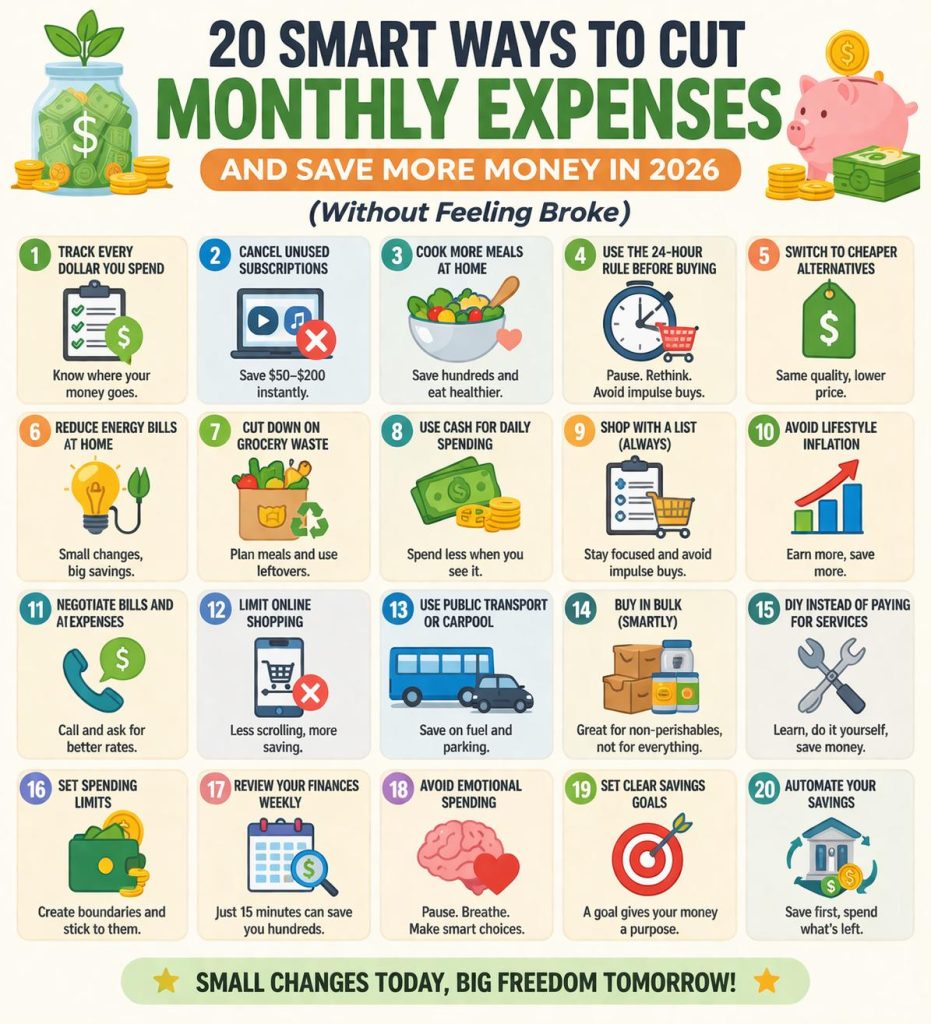
20 Smart Ways to Cut Monthly Expenses and Save More Money in 2026 (Without Feeling Broke)

Cutting monthly expenses can feel overwhelming. I get it. Bills pile up. Small purchases add up. And suddenly, your money feels… gone.
But here’s the truth: you don’t need a higher income to improve your finances. You need a smarter plan.
I believe anyone can cut monthly expenses without feeling restricted or unhappy. It’s not about giving up everything. It’s about making better choices. Small changes. Big results.
Think about this. A few dollars saved daily can turn into hundreds every month. That’s powerful.
In this guide, I’ll show you 20 smart ways to cut monthly expenses, improve your budgeting habits, and finally start saving money with confidence.
You’ll discover simple, realistic tips. No extreme sacrifices. No complicated systems. Just practical strategies you can start today.
If you’ve been searching for ways to save money fast, reduce stress, and take control of your finances—you’re in the right place.
Let’s make your money work smarter, not harder.
20 Smart Ways to Cut Monthly Expenses and Save More Money
1. Track Every Dollar You Spend
It sounds simple. Almost too simple. But this step changes everything.
Most people don’t have a money problem. They have a visibility problem. I’ve been there. You feel like you’re doing “okay,” but somehow your account keeps dropping.
When you start tracking your spending, things become clear. Very clear.
Why This Matters
You can’t fix what you don’t see. Tracking helps you:
- Spot unnecessary expenses
- Understand spending habits
- Take control of your budget
How to Do It Easily
- Use a simple app or spreadsheet
- Write down every expense for 7 days
- Categorize spending (food, bills, fun, etc.)
Real-Life Example
I once tracked my spending for a week and found I was spending $120/month on coffee and snacks. That one habit alone was draining my savings.
Small leaks sink big ships.
Start here. Always start here.
Related: How to Save Money Fast on a Low Income: 21 Simple Tricks That Actually Work
2. Cancel Unused Subscriptions
Subscriptions are sneaky. They feel small. Harmless.
But they add up fast.
Streaming services. Apps. Gym memberships. Free trials that turned into paid plans.
I’ve seen people save $50–$200/month just by cleaning this up.
What to Look For
- Streaming platforms you don’t use
- Apps with monthly fees
- Old memberships
- Duplicate services
Quick Action Plan
- Check your bank statement
- List all subscriptions
- Cancel anything you didn’t use last 30 days
Simple Truth
If you don’t use it—you don’t need it.
That’s how you cut monthly expenses without feeling it.
3. Cook More Meals at Home
Food is one of the biggest expense categories. And one of the easiest to fix.
Eating out feels convenient. But it’s expensive. Very expensive.
I believe cooking at home is one of the fastest ways to save money.
Why It Works
- Restaurant meals cost 3–5x more
- Delivery fees add up
- Tips increase total cost
Easy Ways to Start
- Cook 3–4 meals at home weekly
- Meal prep on weekends
- Keep simple ingredients ready
Real-Life Shift
Switching just 3 takeout meals per week can save you $300–$500/month.
That’s powerful.
You don’t need to cook everything. Just cook more.
Related: 10 Things You Should Stop Buying to Save Money Fast
4. Use the 24-Hour Rule Before Buying
Impulse spending is silent. It feels small in the moment. But over time, it adds up.
I’ve learned this the hard way.
The solution? Pause.
The Rule
Before buying anything non-essential:
👉 Wait 24 hours
Why It Works
- Reduces emotional spending
- Helps you rethink purchases
- Builds discipline
What Happens Next
Most of the time, you realize:
“I don’t actually need this.”
And just like that—you saved money.
Simple rule. Big impact.
5. Switch to Cheaper Alternatives
You don’t always need to cut things out. Sometimes, you just need to replace them.
This is one of my favorite strategies because it feels easy.
Examples
- Brand-name → store brand
- Expensive gym → home workouts
- Premium apps → free versions
Real-Life Example
Switching from premium groceries to store brands saved me $100/month without changing my lifestyle.
Key Mindset
Same purpose. Lower cost.
That’s how you save without sacrifice.
Related: 15 Frugal Living Tips That Save Thousands
6. Reduce Energy Bills at Home
Your electricity bill doesn’t have to be high.
Small habits make a big difference. I’ve seen it firsthand.
Easy Ways to Save
- Turn off lights when not needed
- Use energy-efficient bulbs
- Unplug unused devices
Bonus Tip
Lower AC or heating usage slightly. Even a small change can reduce your bill.
Less waste = more savings.
7. Cut Down on Grocery Waste
Food waste is money waste. Simple.
Many people throw away groceries every week without realizing it.
Fix This Fast
- Plan meals before shopping
- Make a grocery list
- Use leftovers creatively
Example
Turning leftovers into another meal can save $50–$100/month.
Use what you buy. Always.
8. Use Cash for Daily Spending
Cards make spending easy. Too easy.
Cash makes it real.
Why Cash Works
- You see money leaving your hand
- You spend less naturally
- You stay within limits
Try using cash for:
- Groceries
- Dining out
- Entertainment
You’ll notice the difference quickly.
Related: How to Create a Budget for Beginners (Step-by-Step)
9. Shop With a List (Always)
Walking into a store without a list is dangerous.
You buy more. Always.
Simple Rule
👉 No list = no shopping
Benefits
- Avoid impulse buys
- Stay focused
- Save money
I always say: plan before you spend.
10. Avoid Lifestyle Inflation
As income increases, spending often increases too.
This is called lifestyle inflation.
And it’s one of the biggest reasons people stay stuck financially.
The Trap
- New job → new expenses
- Higher income → higher lifestyle
- No real savings growth
Smart Strategy
Keep your lifestyle steady while increasing savings.
Example
If your income increases by $500:
- Save $300
- Spend $200
This keeps you moving forward.
Not sideways.
Related: 50 Easy Ways to Save Money Every Month
11. Negotiate Bills and Expenses
Most people don’t realize this. But many bills are negotiable.
Yes. Negotiable.
What You Can Negotiate
- Internet bills
- Phone plans
- Insurance
How to Do It
Call your provider. Ask for:
- Discounts
- Promotions
- Better plans
Even saving $20–$50/month adds up.
Ask. Always ask.
12. Limit Online Shopping
Online shopping is convenient. And dangerous.
One click. Done.
Set Boundaries
- Remove saved cards
- Avoid browsing apps
- Set spending limits
Real-Life Trick
Add items to cart. Wait 24 hours.
Most times, you won’t buy them.
Control the habit.
13. Use Public Transport or Carpool
Transportation costs can be high.
Fuel. Maintenance. Parking.
Smarter Options
- Public transport
- Carpooling
- Walking when possible
Even reducing driving slightly can save $100+ monthly.
14. Buy in Bulk (Smartly)
Buying in bulk works. But only if done right.
Buy in Bulk:
- Non-perishable items
- Frequently used products
Avoid Bulk:
- Perishable items you won’t finish
Smart buying = smart saving.
15. DIY Instead of Paying for Services
You don’t need to pay for everything.
Some things you can do yourself.
Examples
- Basic home repairs
- Cleaning
- Simple haircuts
Mindset
Learn once. Save forever.
16. Set Spending Limits
Limits create control. Without limits, spending grows.
I believe everyone needs spending boundaries.
How to Set Limits
- Weekly spending cap
- Category-based limits
- Cash envelope system
Example
- $100/week for food
- $50/month for entertainment
When the limit is reached—you stop.
That’s discipline.
17. Review Your Finances Weekly
What you review improves.
Simple truth.
Weekly Check-In
- Review spending
- Check savings
- Adjust budget
Takes 15 minutes. Saves hundreds.
Stay aware. Stay in control.
18. Avoid Emotional Spending
We spend when we feel.
Stress. Boredom. Happiness.
Break the Pattern
- Identify triggers
- Replace spending with habits
- Pause before buying
Awareness is power.
19. Set Clear Savings Goals
Saving without a goal feels pointless.
Goals create motivation.
Examples
- Save $5,000
- Build emergency fund
- Pay off debt
Clear goal = clear action.
20. Automate Your Savings
This is one of the easiest strategies.
And one of the most powerful.
How It Works
- Set automatic transfers
- Save before spending
Why It Works
- No effort needed
- Builds consistency
- Removes temptation
Real-Life Impact
Saving $200/month automatically = $2,400/year.
Without thinking.
That’s smart money management.
Conclusion
Cutting expenses doesn’t mean cutting joy. I truly believe that.
When you learn to cut monthly expenses, you start gaining control. You feel lighter. More confident. More secure.
It’s not about being perfect. It’s about being consistent.
Start small. Cancel one subscription. Cook one extra meal at home. Track your spending for just one week. These simple steps matter more than you think.
Over time, these habits grow into real financial change.
Whether you’re just starting your journey or improving your budgeting strategy, these tips can work for you—no matter your income.
Now it’s your turn.
Pick 2–3 ideas from this list and try them this week. Small action leads to big results.
And remember—every dollar you save is a step closer to financial freedom. 💰